
Contract vs shipment misalignment
Commercial commitments and shipment execution often drift apart, creating gaps between contractual intent and actual delivery.
Commercial commitments, logistics execution, and operational visibility are tightly interdependent. When these elements are managed in disconnected views, coordination weakens, risk becomes harder to understand, and execution loses alignment.
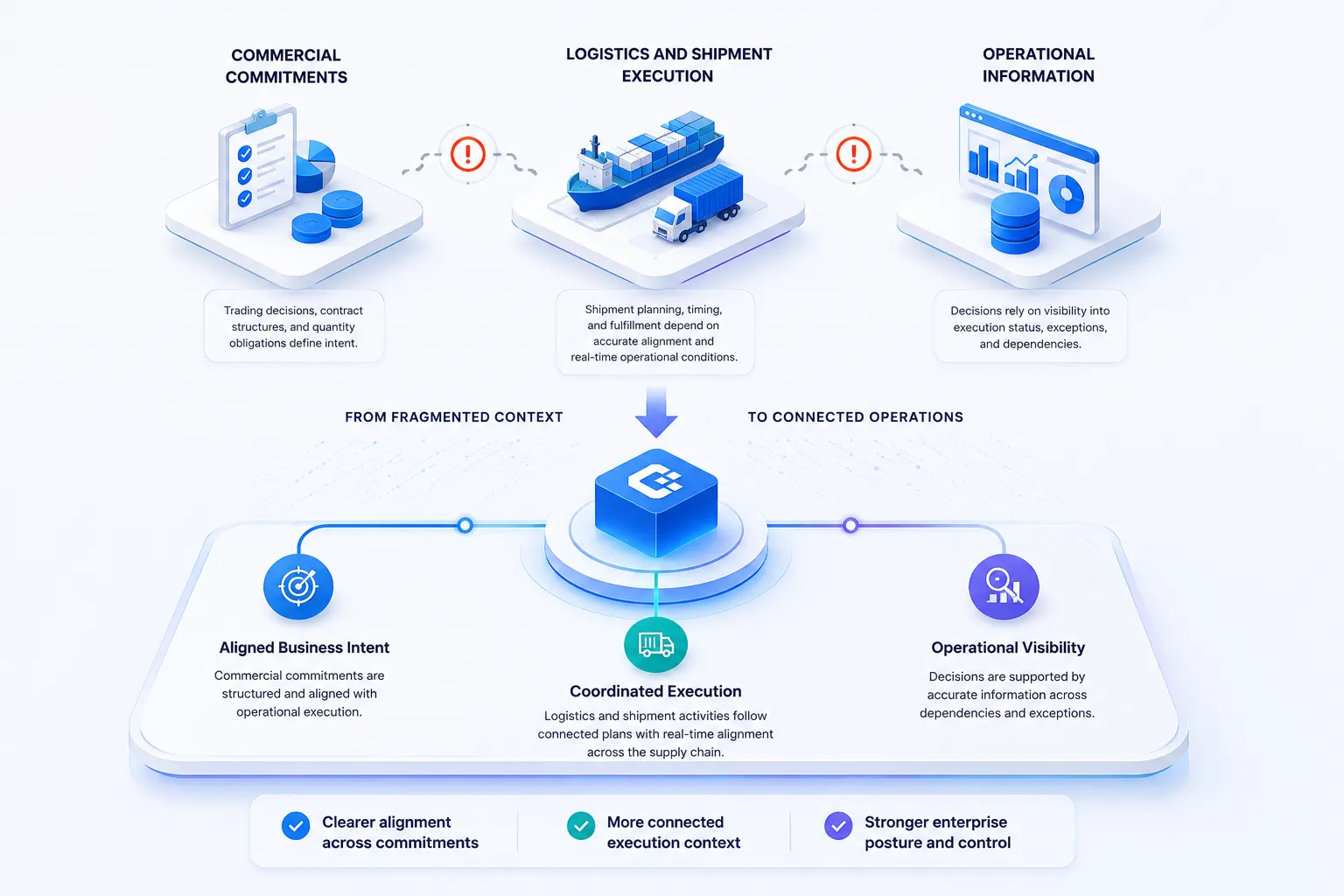
Trading decisions, contract structures, and quantity obligations define the commercial intent, but their impact is only realized through downstream operational execution.
Shipment planning, timing, and fulfillment depend on accurate alignment with commercial context and real-time operational conditions across the logistics chain.
Management decisions rely on clear visibility into execution status, exceptions, and dependencies, which are difficult to maintain when information is fragmented across systems.
Coal trading requires tight coordination across commercial planning, contract obligations, production realities, quality verification, and shipment execution. When these elements operate in disconnected workflows, misalignment accumulates and execution becomes difficult to control.
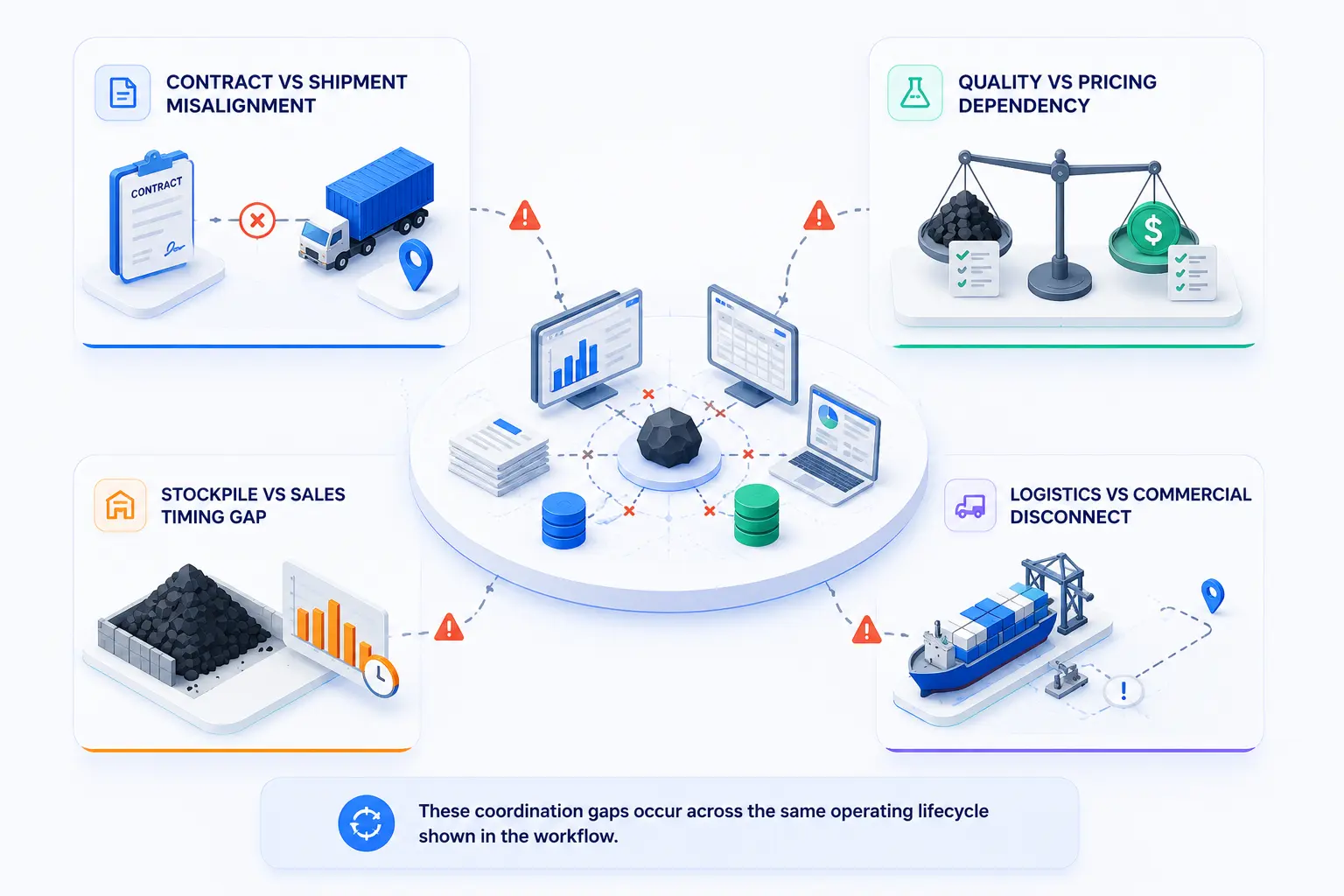
Commercial commitments and shipment execution often drift apart, creating gaps between contractual intent and actual delivery.
Coal quality outcomes directly impact pricing and settlement, but verification is often disconnected from commercial decision-making.
Production flow, inventory position, and sales commitments must align in timing, yet are frequently managed in separate operational views.
Vessel scheduling and logistics constraints shift independently from commercial plans, weakening coordination and execution reliability.
These coordination gaps occur across the same operating lifecycle shown in the workflow.
Nickel trading and processing environments require coordination across mine supply, blending, contract structures, logistics, and downstream delivery. These dependencies introduce additional complexity beyond standard trading workflows and require a more structured operating context to maintain alignment.
Nickel operating workflows are being structured progressively as part of the COALISTIX platform roadmap and are not yet fully standardized across all operating environments.
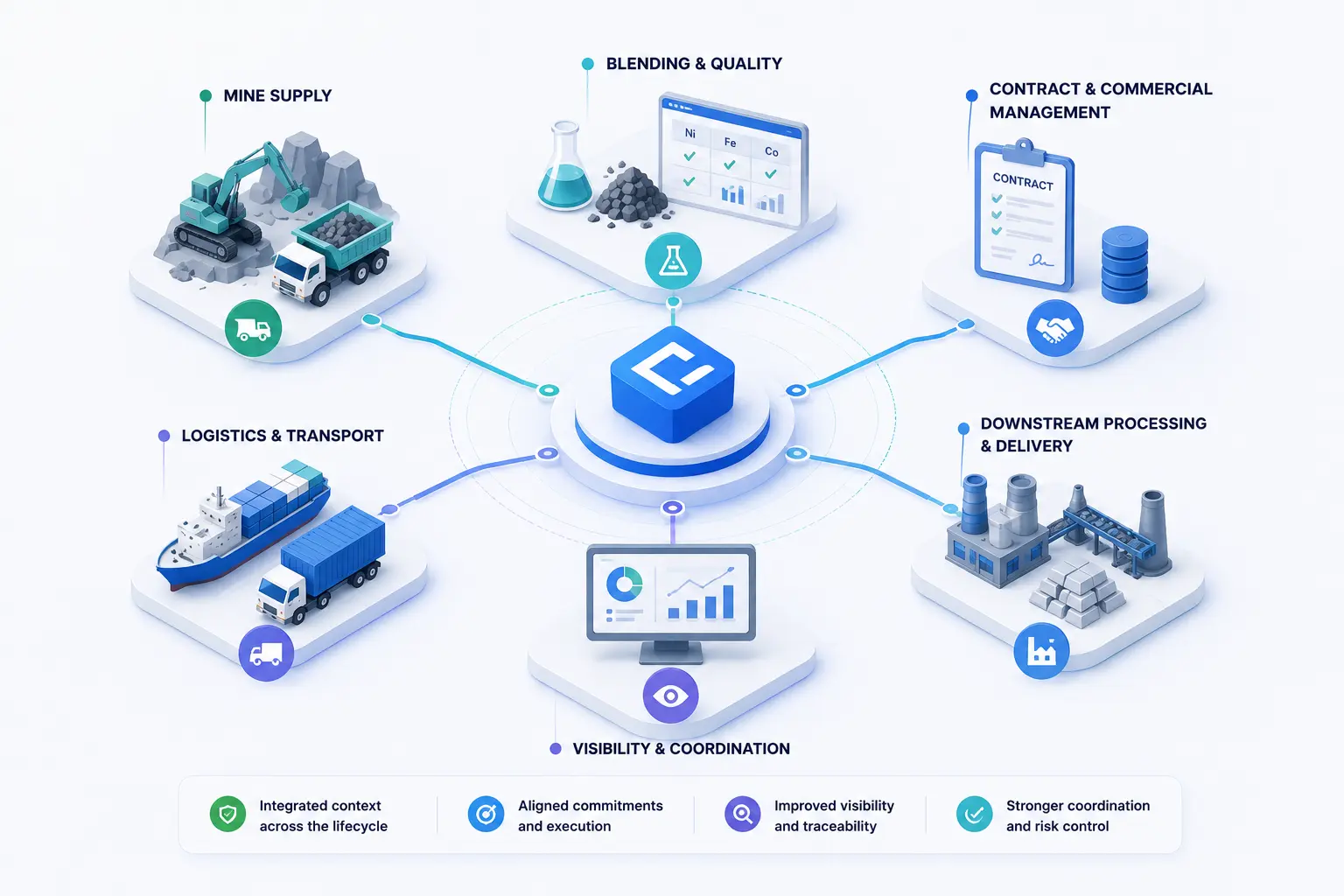
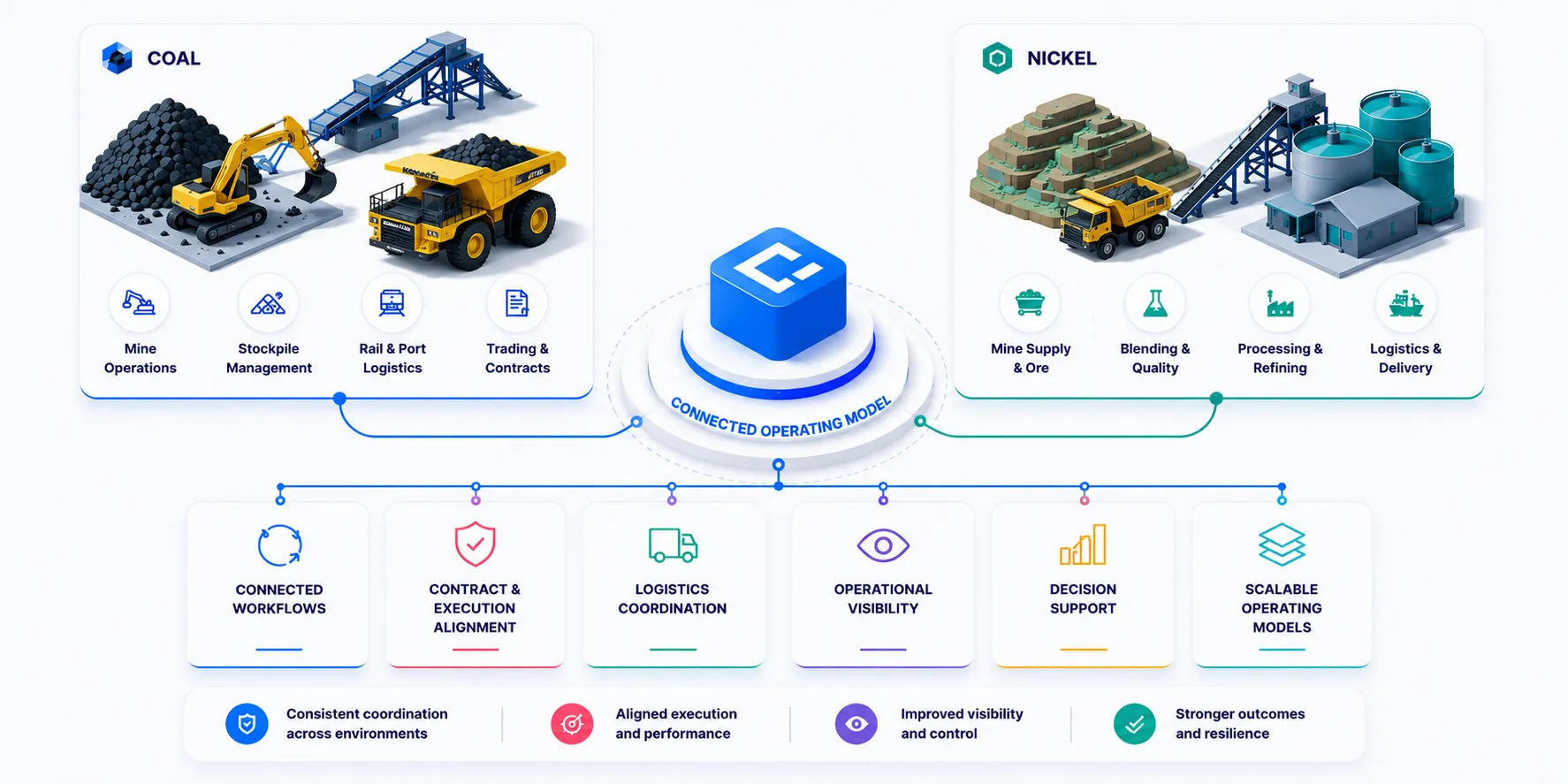
Coal and nickel operate under different constraints, but both converge on the same requirement for connected business workflows, shared execution context, and structured operating models to maintain alignment between decisions and outcomes.
These priorities emerge consistently when coordination is structured at the operating model level rather than managed within isolated workflows.
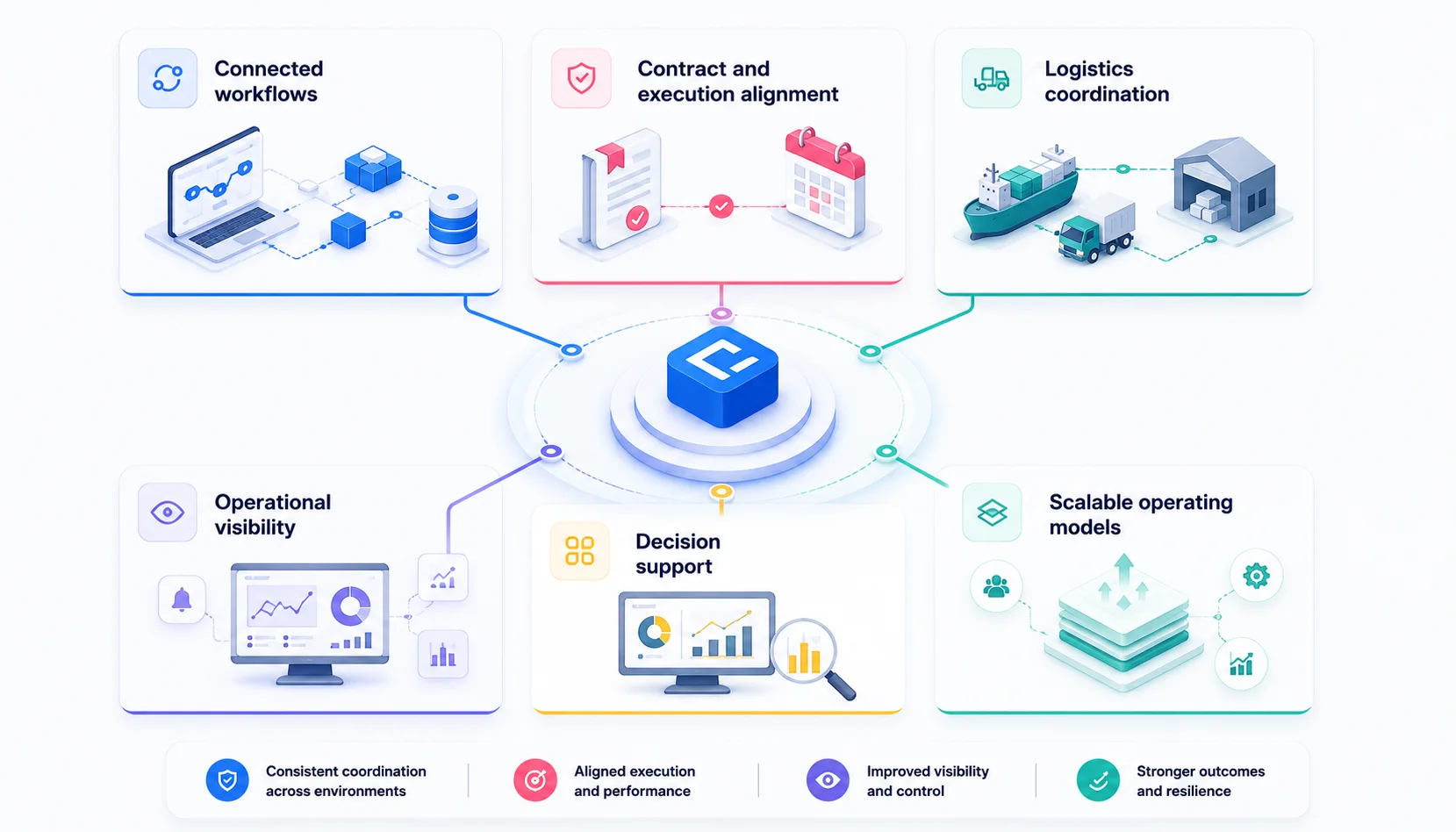
Trading, logistics, and execution activities operate within a shared business context rather than in disconnected execution flows.
Contract obligations remain aligned with execution activities when related operating context is visible across the business.
Movement, timing, and fulfillment decisions operate within a shared context across commercial, logistics, and operational activities.
Operating information is structured to support earlier awareness, clearer execution tracking, and disciplined follow-through.
Decision-making is grounded in structured business context rather than fragmented updates and isolated process views.
Business growth is supported by operating models that maintain consistency across connected domains and evolving operational scope.
Industry context defines the coordination requirements that shape how commercial, contractual, logistics, and operational activities must align. A connected operating model establishes this structure before software can support execution.